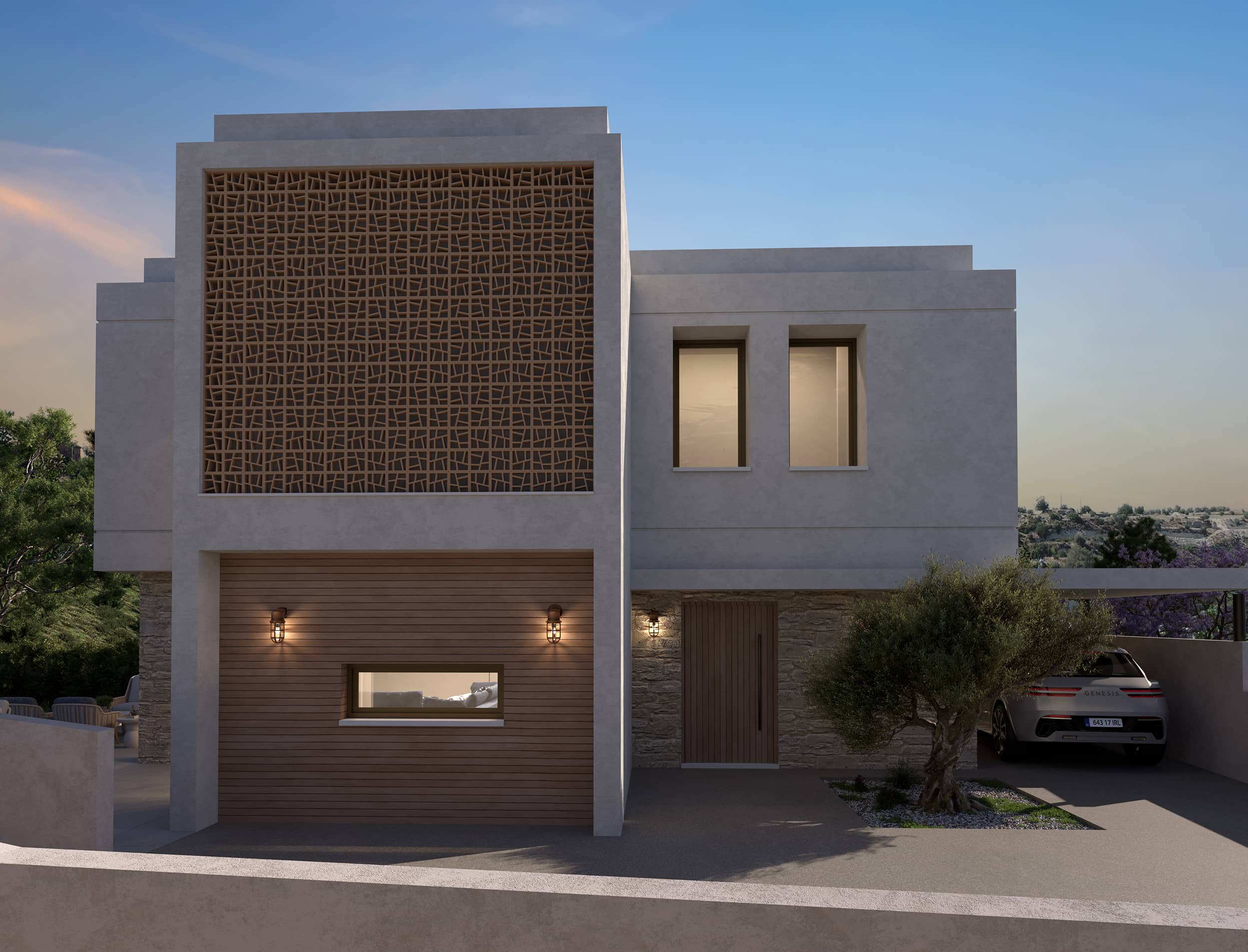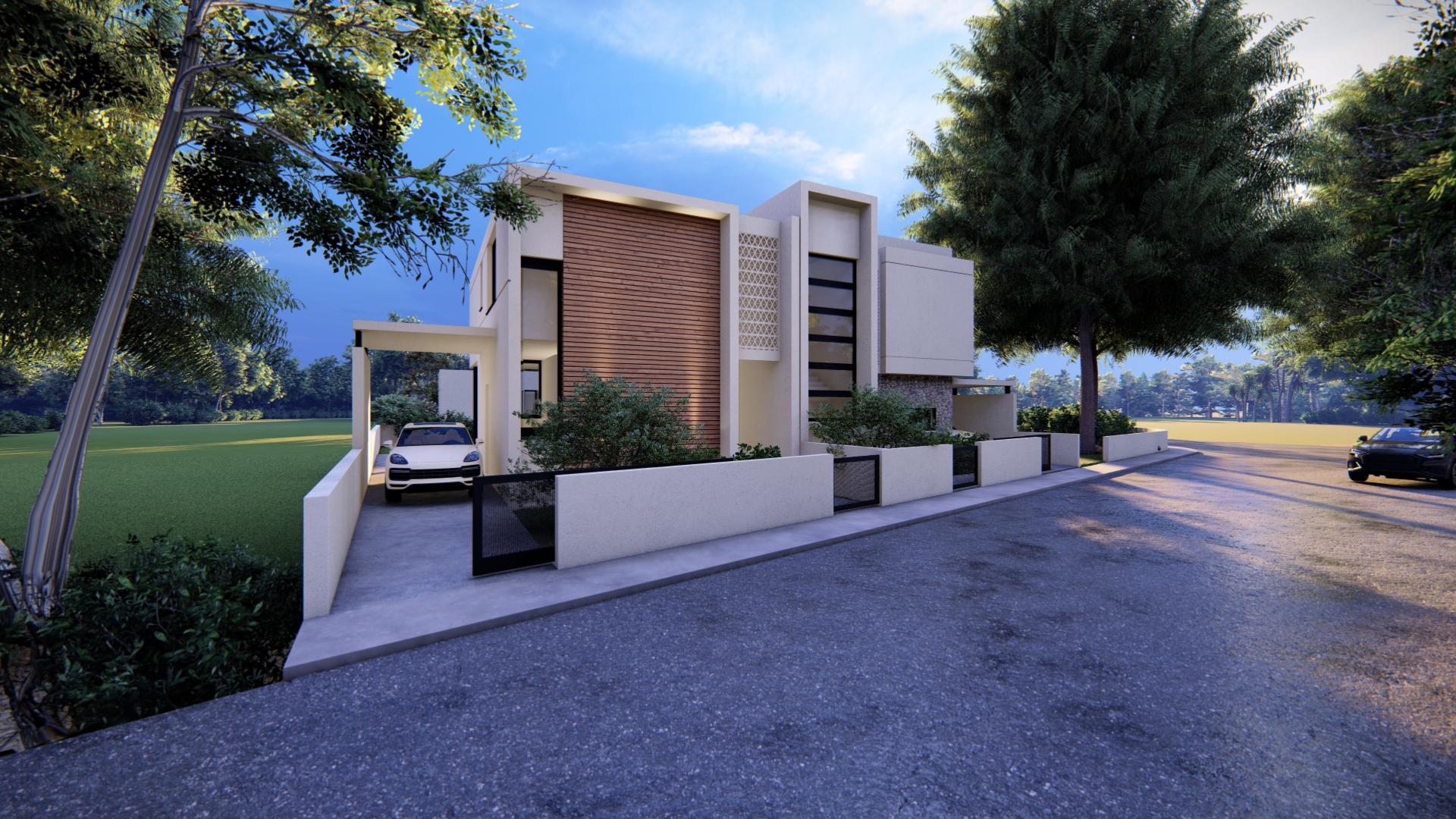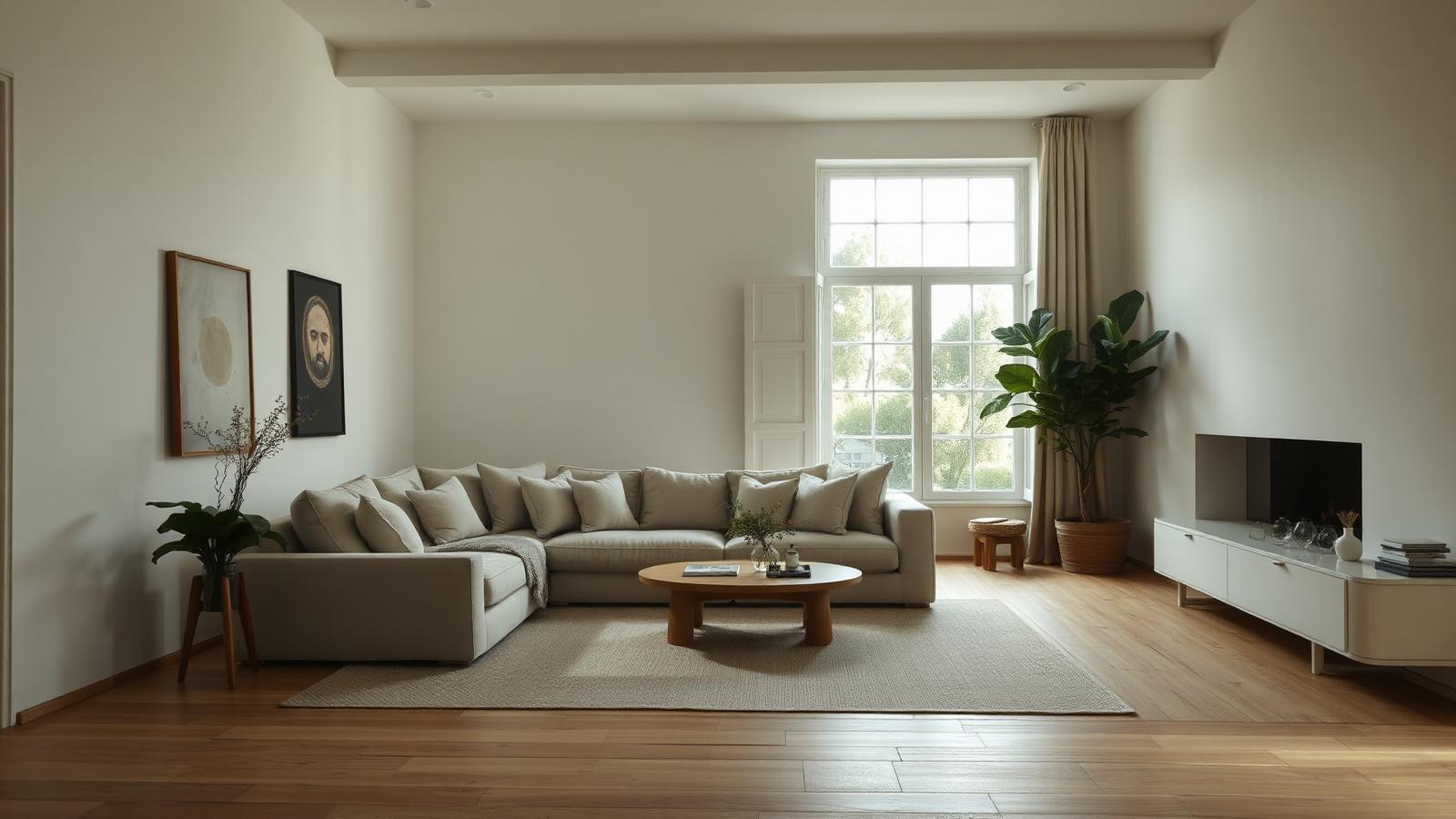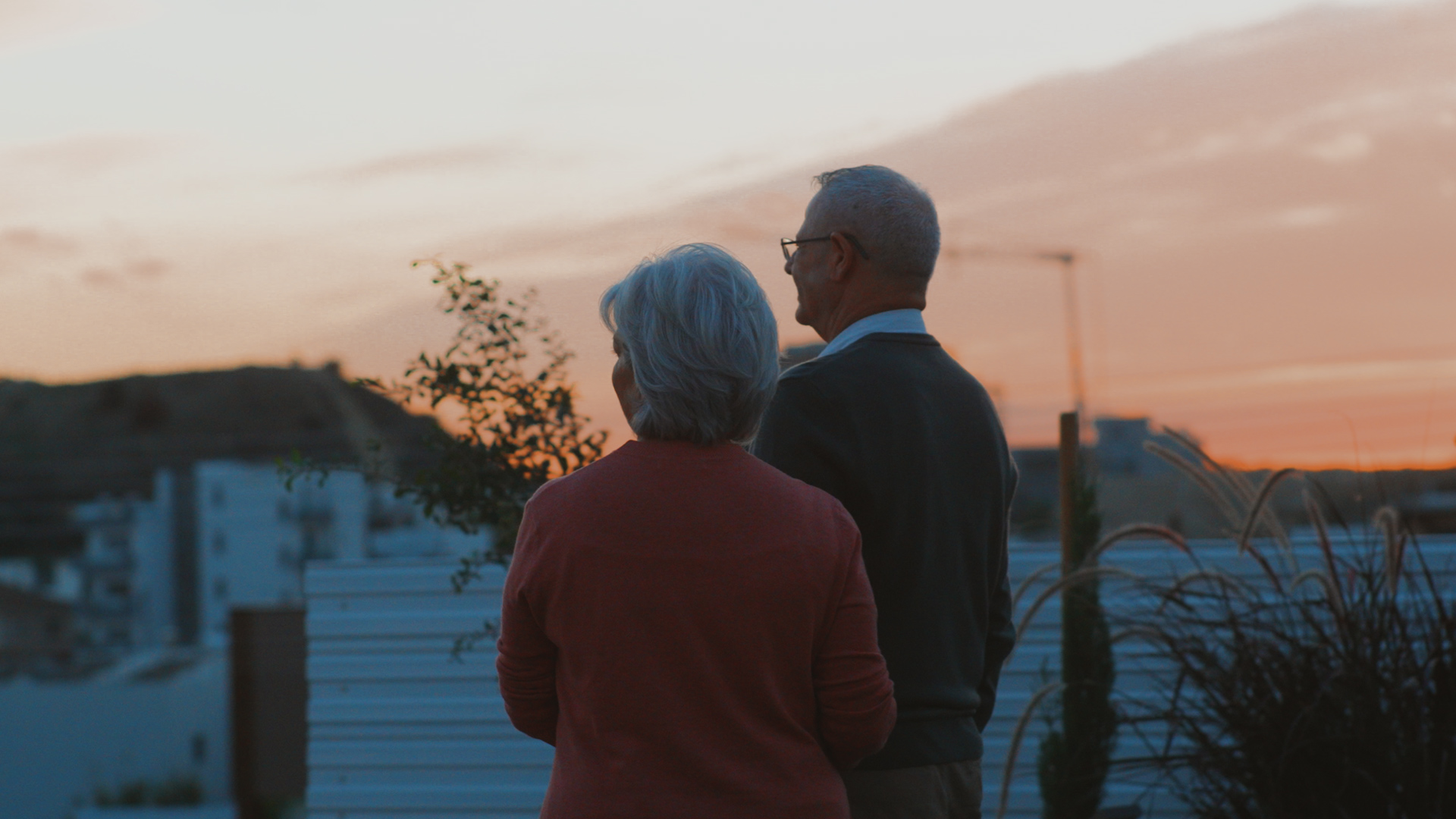
Every family should have the right to dream — the right to a home that lets a Sunday breakfast run long, a garden that a child can grow up in, and a horizon uninterrupted by a neighbour's balcony. In Cyprus, that used to be the ordinary expectation of a working household. Over the last two decades it quietly became a luxury product.
That drift is the reason Extraland Estates exists. It is why we buy generous plots, why we set our residences apart from one another, and why we design for daylight, cross-ventilation and quiet before we design for anything else. This article explains the belief in plain terms: what we mean by the right to dream, why land is the part of a home you cannot renovate later, and how the idea shows up in the houses we actually build in Sotira, Limassol.
What 'the right to dream' actually means
It is not a slogan about aspiration. It is a statement about supply. A family can only dream of a house with land if somebody is still building houses with land at a price that a Cypriot salary can carry. When every new development in a city is an apartment block, the dream is not abandoned by families — it is withdrawn from the market.
So the right to dream, for us, is an obligation on the developer rather than a mood for the buyer. It means choosing land where land is still affordable, keeping plots generous instead of subdividing them to the legal minimum, and pricing against real household income rather than against whatever the last speculative sale achieved.
Cyprus builds up; we build out
Cyprus real estate has drifted toward density — thin plots, tall walls, small gardens, and balconies that face other balconies. There is a logic to it: land inside Limassol is expensive, so the only way to keep a headline price low is to sell less ground and more storeys.
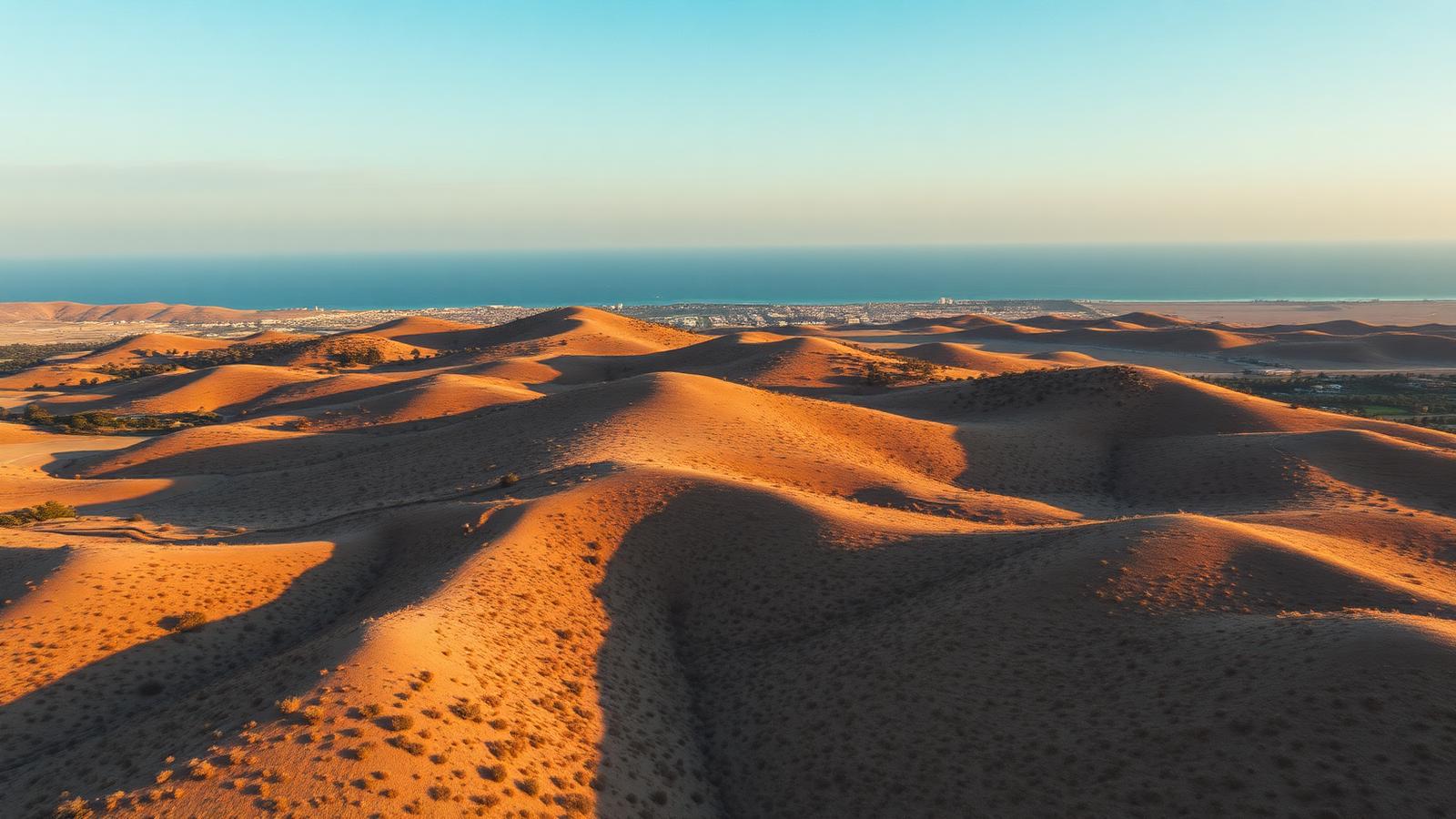
Our brief goes the other way. More square metres of land per family, more distance between homes, more of the coastal landscape left intact. We accept a lower unit count per hectare and recover it through a location strategy — building minutes outside the city rather than inside it, where the same budget buys ground instead of ceiling height.
The result reads quietly on paper — a 400–500 m² plot instead of 180, a shared green edge instead of a shared driveway — but the difference in daily life is enormous. It is the difference between sending a child outside and taking a child outside.
Land is the only part of a house you cannot fix later
Kitchens are replaceable. Bathrooms are replaceable. Flooring, joinery, sanitary ware, even the roof covering — all of it can be renewed within the life of a mortgage. Orientation, plot area, daylight and distance from the neighbour's window cannot. No renovation budget buys back a metre of ground that was never in the title.
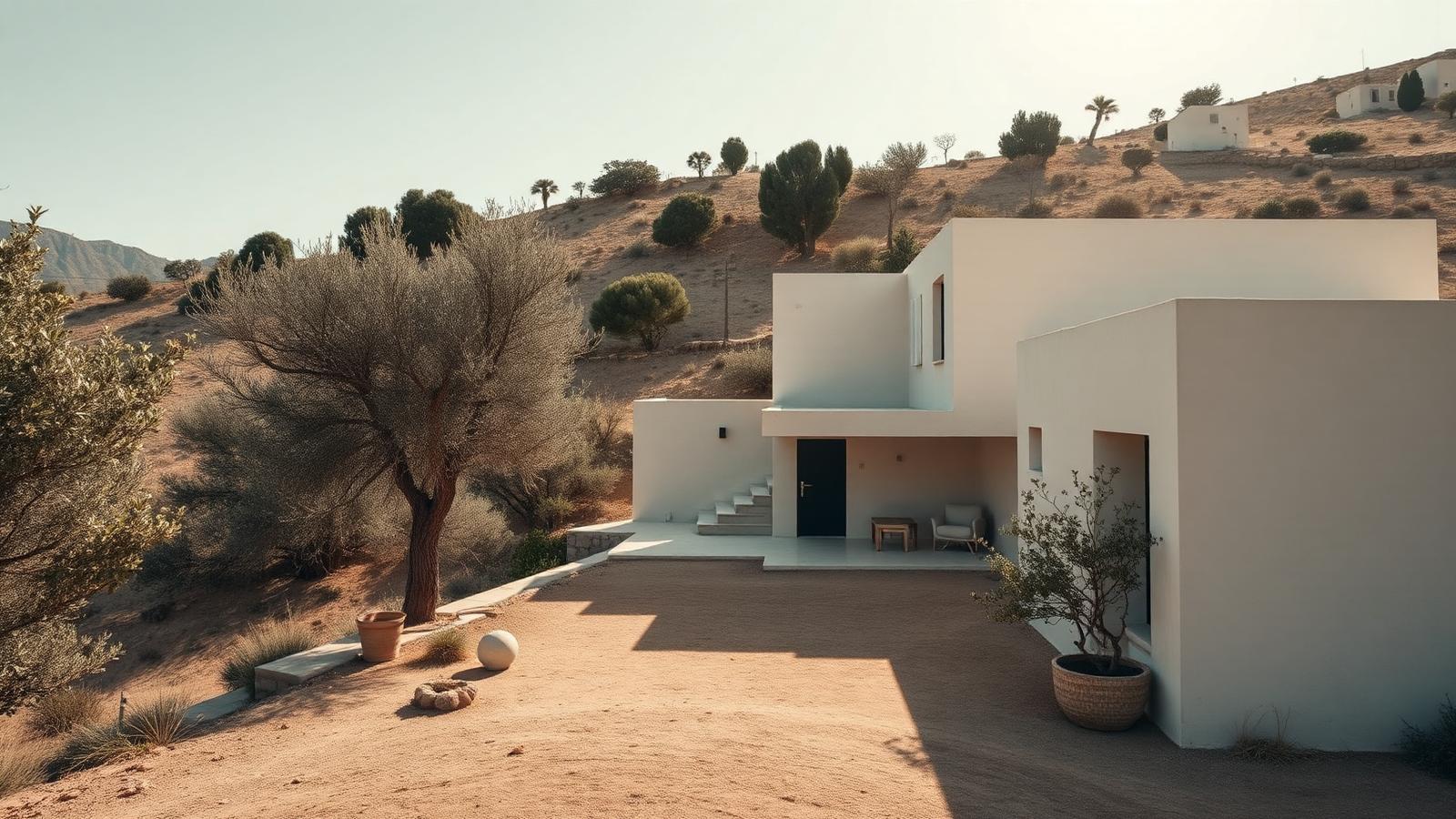
This is why we start every project with the plot rather than the plan. We survey what is already there — trees, terraces, dry-stone walls, the direction of the prevailing summer breeze — and let those facts write the brief. The floor plan is the last decision, not the first.
It is also why we resist the temptation to spend the buyer's money on visible finish at the expense of invisible substance. A family notices the marble on the first day and the shade on the plot for the next thirty years.
Space as an energy strategy, not a lifestyle claim
Distance between houses is not only a comfort question. In a Mediterranean climate it is a performance question. A detached or semi-detached home with openings on more than one elevation can be cross-ventilated on a summer evening; a home hemmed in on three sides cannot. Shade from a retained tree costs nothing to run.
Designing with orientation, thermal mass and cross-ventilation first means the mechanical systems are asked to do less. Lower running costs are the consequence of good siting, not the reward for expensive equipment.
What this looks like in Sotira
Sotira, in the Municipality of Kourion, sits close enough to Limassol that work, schools and the old town stay on the same commute — and far enough out that family-scale plots are still priced for a primary residence rather than a speculation vehicle.
Every home we release there is published with its status, price and completion stage read straight from our operational inventory. If a house is reserved on Monday, the website says so on Monday. Transparency is part of the same argument: a family cannot plan around a dream it is not allowed to see clearly.
The commitment, in one line
Build fewer homes, on more land, at a price a Cypriot family can still carry — and publish the truth about every one of them.
If that is the kind of home you are looking for, the honest next step is to look at what is actually available today rather than what a brochure promises next year.
Frequently asked questions
- What does “More Land, More Life” actually mean?
- It means each family buys a genuinely usable plot rather than a share of a building — typically a detached or semi-detached house set apart from its neighbours, with a garden, daylight on more than one elevation and privacy designed into the layout.
- Why build outside Limassol instead of in the city?
- Land inside Limassol is priced on the assumption an apartment block will stand on it, which makes a family house on a real plot unaffordable. Building minutes outside the city lets the same budget buy ground rather than storeys.
- Does a bigger plot cost more to run?
- Not necessarily. A well-oriented detached house with shade and cross-ventilation usually costs less to cool than a poorly oriented dwelling with heavy glazing, and garden maintenance is largely a matter of planting choices.